

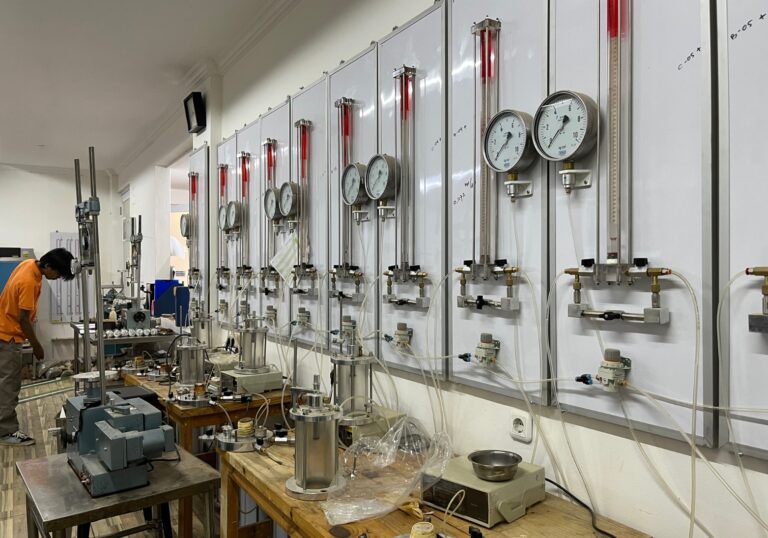
Uniaxial Compressive Strength (UCS) Test + Soil and Rock Analysis
The Uniaxial Compressive Strength (UCS) Test is one of the most important laboratory methods in geotechnical engineering. It is widely used to evaluate soil and rock strength under axial compression without lateral confinement.
Accurate Soil and Rock Analysis through UCS testing helps engineers design safe foundations, stable slopes, and reliable underground structures. Without proper strength data, construction and mining projects may face structural instability and increased financial risk.
What is the Uniaxial Compressive Strength (UCS) Test?
The Uniaxial Compressive Strength (UCS) Test measures the maximum axial compressive stress that a soil or rock specimen can withstand before failure. During the test, a cylindrical sample is subjected to increasing vertical load until it fractures or deforms significantly.
The UCS value represents the peak stress at failure and is expressed in units such as MPa or kPa. This value is critical in determining the mechanical behavior of geomaterials.
Testing procedures generally follow internationally recognized standards such as those published by ASTM International to ensure accuracy and repeatability.
Why UCS Testing is Essential in Soil and Rock Analysis
Soil and Rock Analysis requires reliable mechanical parameters. The Uniaxial Compressive Strength (UCS) Test provides essential information for:
Determining rock mass classification
Estimating bearing capacity
Evaluating slope stability
Supporting tunnel and excavation design
Assessing underground mining safety
By understanding soil and rock strength, engineers can reduce uncertainty and improve structural performance.
UCS Test for Soil Strength Evaluation
For cohesive soils, particularly clays, the Uniaxial Compressive Strength (UCS) Test is commonly used to determine undrained shear strength. The results help engineers:
Predict settlement behavior
Design shallow foundations
Assess embankment stability
Plan ground improvement works
Soil and Rock Analysis through UCS testing ensures that foundation systems are based on measurable laboratory data rather than assumptions.
UCS Test in Rock Mechanics
In rock engineering, the Uniaxial Compressive Strength (UCS) Test is fundamental for classifying rock materials. The UCS value helps determine whether the rock is very weak, weak, moderately strong, strong, or very strong.
Rock strength data obtained from UCS testing is widely used for:
Open pit mining design
Underground excavation planning
Tunnel support systems
Rock slope engineering
Accurate Soil and Rock Analysis supports safer excavation and optimized engineering design.
Key Factors Affecting UCS Test Results
Several factors influence UCS outcomes, including:
Sample preparation quality
Moisture content
Loading rate during testing
Specimen geometry
Material heterogeneity
Strict laboratory procedures are essential to ensure reliable Soil and Rock Analysis results.
Benefits of Professional UCS Laboratory Testing
Professional Uniaxial Compressive Strength (UCS) Test services provide:
High-precision laboratory equipment
Standardized testing methodology
Calibrated loading systems
Comprehensive technical reporting
Engineering interpretation of results
Choosing a certified laboratory ensures dependable Soil and Rock Analysis for critical infrastructure and mining projects.
The Uniaxial Compressive Strength (UCS) Test plays a vital role in Soil and Rock Analysis for construction, infrastructure, and mining projects. By providing accurate compressive strength data, UCS testing supports safer design decisions and long-term structural performance.
Investing in reliable UCS laboratory testing is a proactive step toward minimizing engineering risk and improving project sustainability.