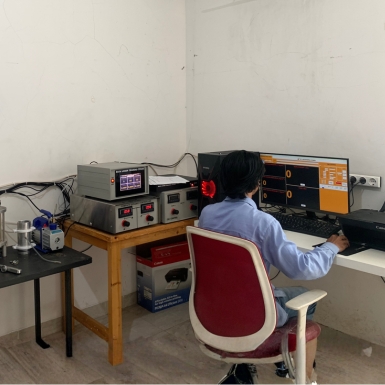
Geotechnical testing equipment plays a vital role in determining the engineering properties of soil, rock, concrete, and construction materials. Accurate laboratory instruments support reliable geotechnical analysis, design validation, and quality control for civil, mining, and infrastructure projects.
Fully Automated Systems for
Soil, Rock, and Geosynthetics
Our products are designed and developed incorporating over four decades of customer experience and feedback from the broadest range of users. We support the needs of research & advanced testing with sophisticated features while also uniquely offering practical solutions to benefit commercial, production, and labs of all sizes.
Our focus on partnering with customers and delivering the highest level of support means you get the most out of your equipment and feel comfortable and confident using it.
What Is Geotechnical Testing Equipment?
Geotechnical testing equipment refers to specialized laboratory and field instruments used to evaluate physical, mechanical, and hydraulic properties of geomaterials. These tools ensure that engineering decisions are based on accurate and repeatable test results.
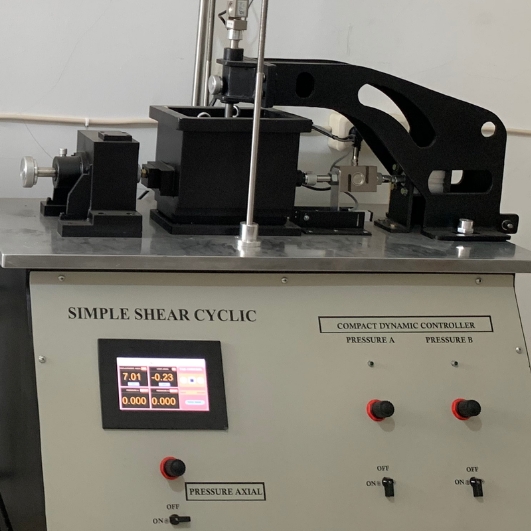
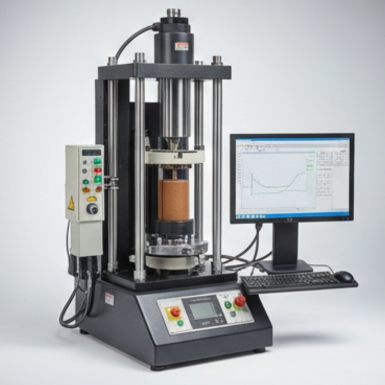
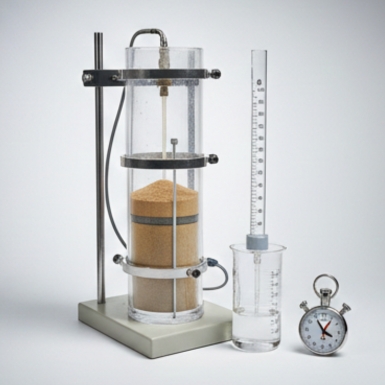
Geotechnical testing equipment encompasses a wide range of specialized instruments used to evaluate soil behavior under various loading and drainage conditions, including consolidation testing, cyclic triaxial, cyclic simple shear, permeability testing, and strength testing. These testing systems are essential for determining compressibility, shear strength, hydraulic properties, and cyclic response of soils, providing reliable data to support safe and efficient geotechnical design for civil, mining, and infrastructure projects.
Consolidation Testing
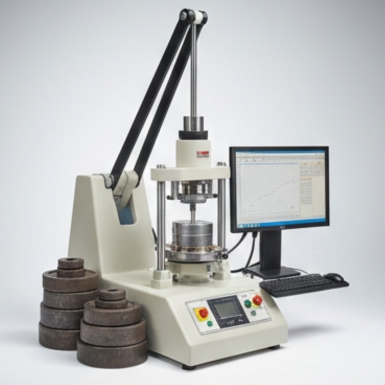
Consolidation testing evaluates the compressibility and time-dependent settlement behavior of soil by applying incremental vertical loads to a specimen. The results provide key parameters such as compression characteristics and rate of consolidation, which are essential for predicting settlement and designing foundations, embankments, and other load-bearing structures.
Strength Testing
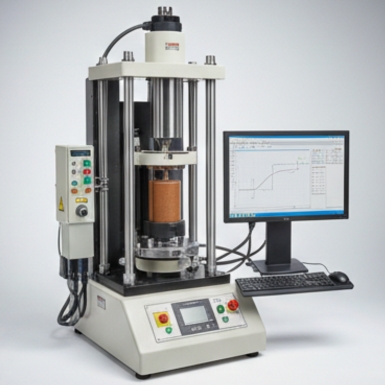
Strength testing determines the shear strength characteristics of soil through laboratory methods such as triaxial compression, direct shear, and unconfined compression tests. These tests provide fundamental strength parameters required for the safe design of foundations, slopes, retaining structures, and other geotechnical systems.
Cyclic/Dynamic Testing
Cyclic or dynamic soil testing simulates repeated loading conditions caused by earthquakes, traffic, or wave action by applying cyclic stresses to soil specimens. This testing is critical for assessing soil behavior under dynamic loads, including stiffness degradation, strength variation, and liquefaction potential over time.
Permeability Testing
Permeability testing measures the ability of soil to transmit water through its pore structure by determining its hydraulic conductivity. The results are vital for understanding groundwater flow, designing drainage and seepage control systems, and evaluating soil suitability for foundations, embankments, and earth-retaining structures.
Compliance with International Standards
All geotechnical testing equipment is designed and calibrated to meet recognized standards such as ASTM, ISO, BS, and EN, ensuring compatibility with global testing requirements.