

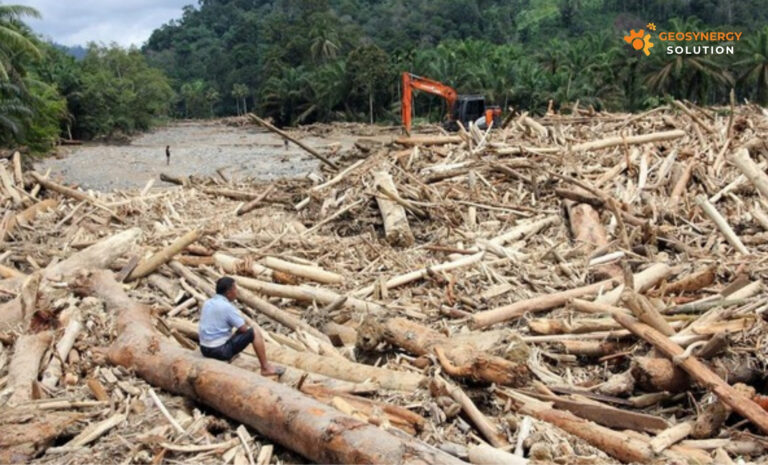
Water Recedes, Timber Log Evacuation in Sumatra Accelerated
Flood conditions across Aceh and Sumatra are gradually improving as water levels begin to recede after several days of clear weather. Although the situation is getting better, recovery efforts remain challenging. One of the main priorities is restoring access routes and accelerating the removal of large timber logs carried by the floodwaters.
According to Indonesia’s National Disaster Management Agency (BNPB), most affected areas are now drying up. However, damaged infrastructure—such as broken bridges and blocked roads—continues to hinder the distribution of essential aid. Therefore, authorities are now focusing on rapid post-flood recovery to ensure support reaches affected communities as soon as possible.
Timber Log Evacuation in Tapanuli Selatan
One of the most critical recovery actions is the evacuation of massive timber logs that were swept into residential areas in Tapanuli Selatan. These large logs pose safety hazards and may obstruct ongoing recovery operations.
To tackle the issue, BNPB and the Ministry of Public Works have deployed heavy equipment, chainsaws, and water pumps to speed up the removal process. As a result, the evacuation can be carried out more safely and efficiently, reducing the risk of future incidents and helping residents return to normal activities sooner.
Artikel terkait: When Does the Rainy Season Turn into a Hydrometeorological Threat?
Updated Casualty and Damage Data
BNPB continues to update the number of victims and affected residents. As of the latest report, the disaster has caused significant losses across multiple regions in Sumatra:
Fatalities: 604 people
Missing persons: 464 people
Injuries: 2,600 people
Affected residents: 1.5 million
Evacuees: 570,000 people
Damage to public and residential infrastructure includes:
3,500 houses severely damaged
4,100 houses moderately damaged
20,500 houses with minor damage
271 bridges damaged
282 educational facilities affected
These numbers highlight the magnitude of the disaster and the urgent need for coordinated recovery actions.
Ongoing Recovery Efforts
As water levels continue to decline, recovery teams are intensifying efforts to clear debris, repair access routes, and deliver humanitarian aid. Collaboration between BNPB, government agencies, local authorities, and volunteers is essential to restoring normal conditions.
Furthermore, communities are encouraged to stay cautious, as changing weather patterns may still pose risks in certain areas. Even so, with strong coordination and continuous support, recovery efforts in Sumatra are expected to progress steadily and effectively.