

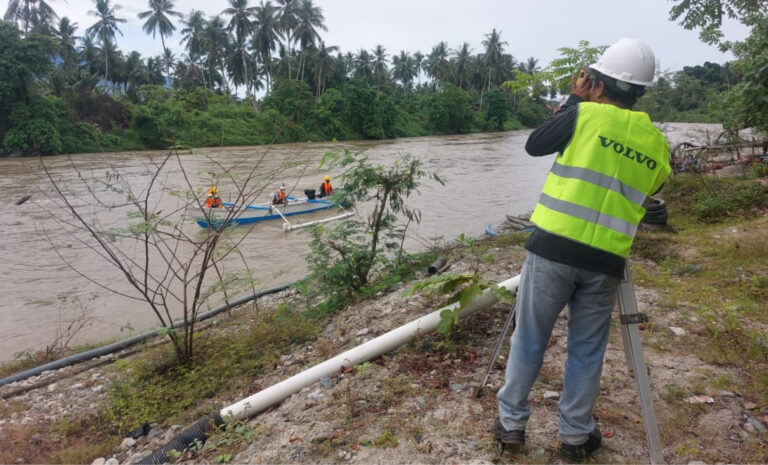
Detecting Liquefaction Potential Using Resistivity Analysis
Liquefaction is one of the most critical ground hazards that can damage infrastructure during an earthquake. When saturated soil loses its strength, the ground behaves like a liquid, causing buildings, roads, and foundations to sink or tilt. Because this risk is often hidden beneath the surface, engineers need an accurate method to detect it early. Resistivity analysis offers a reliable and non-destructive way to identify zones that are vulnerable to liquefaction.
This article explains how resistivity methods work, why they are effective, and how they support safer construction planning.
What Is Liquefaction and Why It Matters?
Liquefaction occurs when loose, saturated sandy soil loses its stability due to seismic shaking. As a result, the soil structure collapses, pushing water pressure upward. Consequently, the ground becomes unstable and can no longer support loads.
Because liquefaction can lead to severe damage, early identification is essential for engineers, contractors, and developers.
How Resistivity Analysis Detects Liquefaction Potential
Resistivity analysis measures how strongly the subsurface materials resist electrical current. Since water-saturated and loose soils generally show low resistivity values, these zones can indicate potential liquefaction conditions.
To understand the ground behavior, engineers commonly use methods such as:
Electrical Resistivity Tomography (ERT)
Vertical Electrical Sounding (VES)
2D and 3D Resistivity Imaging
These methods allow professionals to create detailed subsurface models. Because resistivity data reflects moisture content, soil density, and saturation level, it becomes a powerful tool for detecting liquefiable layers.
Key Indicators of Liquefaction from Resistivity Data
Resistivity analysis helps identify characteristics such as:
High saturation zones
Loose granular soil layers
Shallow groundwater table
Low-density sandy layers
Subsurface inconsistencies
When these factors appear together, the site may have a high liquefaction risk.
Why Resistivity Analysis Is More Reliable
Compared to traditional drilling alone, resistivity methods offer several advantages:
1. Non-Destructive and Efficient
Because the process does not require deep excavation, the investigation is faster and safer.
2. Wider Data Coverage
While boreholes only provide point-based data, resistivity surveys cover large areas continuously. Therefore, engineers get a more complete subsurface picture.
3. Better Correlation With Ground Saturation
Liquefaction is strongly influenced by groundwater. Consequently, resistivity results provide valuable insights into water distribution and soil behavior.
4. Supports Drilling Verification
Although resistivity gives a broad overview, drilling confirms the findings. Together, these methods improve accuracy.
Applications in Construction and Infrastructure
Resistivity analysis is widely used in:
Road and bridge projects
Port and waterfront developments
Industrial facilities
Residential area planning
Disaster mitigation studies
Dam and embankment monitoring
Because liquefaction affects structural integrity, identifying it early can prevent severe losses.
Benefits of Assessing Liquefaction Potential Early
Early detection using resistivity analysis provides:
Safer foundation and structural design
Reduced construction risks
Better planning for ground improvement
Accurate mitigation strategies
Cost savings during project execution
Therefore, integrating resistivity data into geotechnical studies helps ensure long-term stability and safety.
Resistivity analysis is a powerful method for detecting liquefaction potential before construction begins. By mapping saturated and loose soil layers, it gives engineers the information needed to avoid dangerous zones, strengthen weak areas, and design safer structures. As a result, projects benefit from improved reliability, reduced uncertainty, and stronger protection against seismic hazards.