

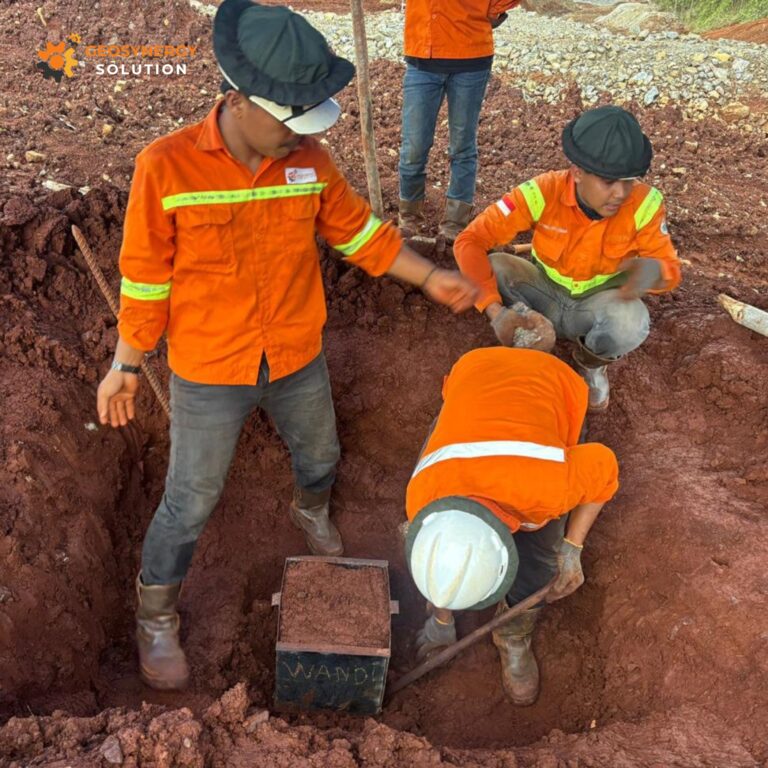
In geotechnical and environmental engineering, obtaining accurate soil samples is essential for reliable laboratory testing. One of the most effective methods is box sampling, which allows engineers to collect undisturbed soil samples while maintaining their natural structure. However, the accuracy of soil testing depends not only on the sampling method but also on how well the sample is preserved. Without proper preservation, even the best sampling method can result in misleading test results. Consequently, entire construction or mining projects may face unnecessary risks.
What Is Box Sampling?
Box sampling is a field technique used to collect undisturbed soil samples. Unlike disturbed sampling methods, this technique captures soil in a rigid box, maintaining its original structure, layering, and water content. Engineers and geologists rely on box sampling for detailed analysis of:
Soil strength and shear behavior
Compressibility and settlement characteristics
Permeability and groundwater interaction
Soil stratification and natural layering
As a result, laboratories can replicate actual ground conditions more accurately than with disturbed samples.
Why Soil Sample Preservation Matters
Even with high-quality box samples, poor preservation can significantly affect testing outcomes. Soil is highly sensitive to changes in moisture, temperature, and handling. For example, moisture loss may lead to inaccurate strength or compressibility results. Other risks include:
Disturbance of natural layers, affecting stratification analysis.
Contamination from external materials, compromising chemical testing.
Shrinkage or swelling, altering the soil’s original properties.
Therefore, proper preservation ensures that samples arrive in the laboratory in a condition as close as possible to their natural state in the field.
👉 Related article: Disturbed Sample in Geotechnical Investigation
Best Practices for Soil Sample Preservation in Box Sampling
1. Sealing and Wrapping
Box samples should be tightly sealed using plastic film, wax coating, or aluminum foil to prevent moisture loss and air exposure.
2. Labeling and Documentation
Accurate labels with sample depth, location, and date are essential for traceability. In addition, they help ensure reliable test results.
3. Storage and Transportation
Samples must be stored in cool, stable conditions and transported with minimal vibration. This way, disturbance can be reduced to a minimum.
4. Minimizing Handling
Excessive handling can disturb the soil’s natural condition. Therefore, samples should only be opened in controlled laboratory environments.
Related article: Disturbed Sample Geotechnical Investigation
Applications of Box Sampling in Engineering Projects
Box sampling and preservation techniques are widely applied in engineering and environmental studies. Some common applications include:
Foundation design: Determining soil strength and compressibility.
Slope stability analysis: Understanding natural layering and shear resistance.
Environmental studies: Testing soil contamination and groundwater interaction.
Infrastructure projects: Supporting road, bridge, and dam construction.
Moreover, in each of these applications, both box sampling and proper preservation play a crucial role in ensuring reliable results.
Box sampling is a proven method for obtaining undisturbed soil samples. Nevertheless, its effectiveness depends heavily on soil sample preservation. By maintaining the natural condition of soil during storage and transport, engineers and laboratories can achieve accurate test results, reduce project risks, and ensure safer infrastructure development.
In summary, for any geotechnical or environmental project, engaging professionals who understand both sampling and preservation techniques is not optional—it is essential.