

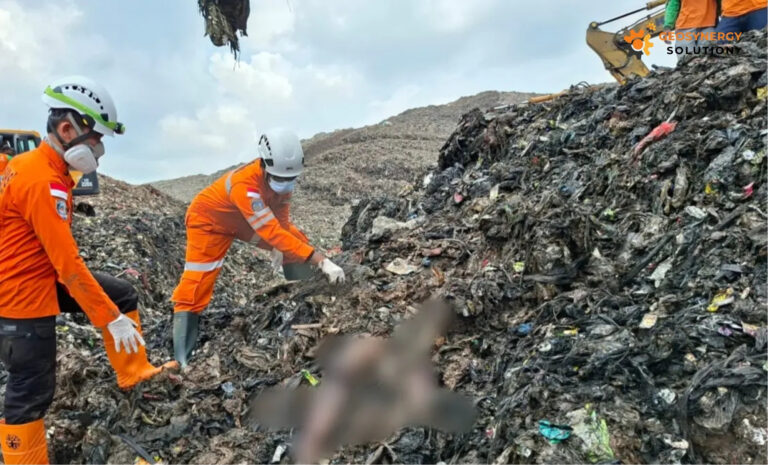
Learning from the Bantargebang Landslide: The Importance of Professional Geotechnical Analysis for Landfill Stability
The tragic landfill landslide at Bantargebang Integrated Waste Processing Site highlights the urgent need for better waste management and stronger geotechnical safety practices. The incident not only caused casualties but also exposed deeper systemic issues in how waste disposal sites are planned and operated in Indonesia.
This event demonstrates why professional geotechnical analysis for landfill stability is essential. Without proper ground investigation, slope stability assessment, and monitoring systems, large waste disposal sites can become hazardous environments for workers and nearby communities.
The Scale of the Bantargebang Landfill
The Bantargebang facility is widely known as one of the largest landfill sites in Southeast Asia. Covering an area of approximately 110.3 hectares, the site has been operating since 1989 and receives waste transported from Jakarta every day.
Reports indicate that the landfill receives more than 7,300 tons of waste daily, creating massive waste piles that resemble artificial hills. In some areas, the accumulated waste reaches heights comparable to a 16-story building.
Over decades of operation, the total waste volume stored at the site is estimated to have reached around 55 million tons. Such enormous waste accumulation requires strict engineering control and continuous stability monitoring.
Open Dumping Practices and Structural Risks
Many landfill sites in Indonesia still operate using a collect-transport-dump system, often referred to as open dumping. Environmental advocates have criticized this approach because it lacks proper waste sorting, treatment, and engineering control.
Environmental campaigners from WALHI have stated that the waste management chain—from upstream waste reduction to downstream disposal—remains poorly organized. Without proper planning, landfill sites can become unstable due to:
Excessive waste accumulation
Poor drainage and leachate control
Weak soil foundation conditions
Lack of slope stabilization systems
These factors significantly increase the risk of landfill slope failure.
Government Response and Legal Enforcement
Following the disaster, the Ministry of Environment and Forestry of Indonesia initiated a comprehensive investigation into the incident. Authorities emphasized that responsible parties could face legal consequences under Law No. 32 of 2009 on Environmental Protection and Management.
Violations that lead to environmental damage or fatalities may result in penalties of up to 10 years of imprisonment and fines reaching IDR 10 billion.
The disaster also occurred shortly after Prabowo Subianto announced a national commitment to tackle Indonesia’s waste crisis through the Indonesia ASRI Movement, which focuses on safer, healthier, cleaner, and more sustainable waste management.
Indonesia’s Growing Waste Challenge
Indonesia is facing a significant waste management challenge. Government projections suggest that many landfill sites across the country could reach overcapacity by 2028, or even earlier if waste generation continues to increase.
To address this issue, the government plans to develop several Waste-to-Energy (WTE) facilities, also known as Pengolahan Sampah menjadi Energi Listrik (PSEL). These projects aim to reduce landfill dependency while generating renewable electricity from waste.
However, even with new technologies, landfill sites will still require strong engineering design and geotechnical monitoring to prevent structural failures.
Why Geotechnical Analysis Is Critical for Landfill Stability
Large landfill structures behave similarly to engineered slopes. Their stability depends on multiple geotechnical factors, including soil strength, waste composition, drainage conditions, and slope geometry.
Professional geotechnical analysis typically includes:
Subsurface soil investigation
Laboratory testing of soil and waste materials
Slope stability modeling
Groundwater and leachate analysis
Monitoring systems for slope movement
These studies help engineers understand potential risks and design effective stabilization measures.
International technical guidelines from organizations such as International Society for Rock Mechanics and ASTM International are commonly used to ensure reliable geotechnical evaluation.
Preventing Future Landfill Disasters
Preventing similar disasters requires an integrated approach combining waste management reform and engineering expertise. Key steps include:
Implementing modern landfill design standards
Conducting professional geotechnical investigations before expansion
Monitoring slope stability and drainage conditions
Reducing waste volume through recycling and energy recovery
By applying these strategies, landfill facilities can operate more safely while protecting surrounding communities.
The landslide at Bantargebang serves as a critical reminder that landfill sites are complex engineering systems. Without proper planning and monitoring, large waste structures can become unstable and dangerous.
Professional geotechnical analysis for landfill stability plays a vital role in ensuring safe landfill operations. Through proper investigation, engineering design, and continuous monitoring, future environmental disasters can be prevented while supporting sustainable waste management practices.