

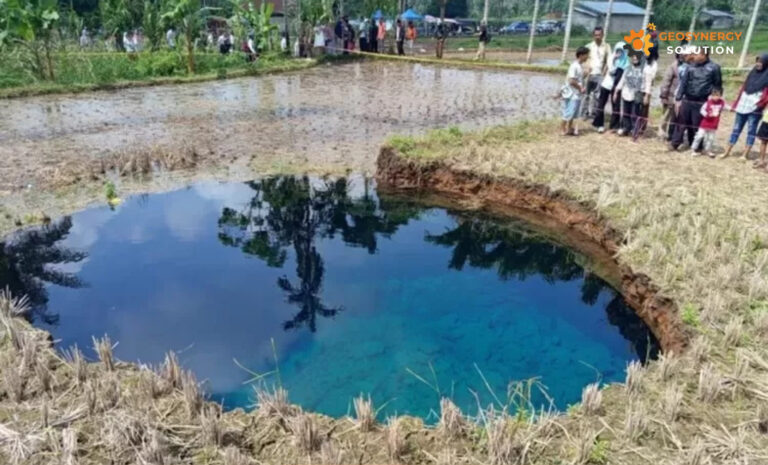
Sinkhole West Sumatra and the Secrets of Its Underground Structure
Sinkhole West Sumatra has recently gained widespread attention due to its unusual depth and sudden appearance. This geological phenomenon highlights the hidden complexity beneath the Earth’s surface and raises important questions about subsurface conditions in the region. Understanding the underground structure behind sinkholes is essential for risk mitigation, land-use planning, and public safety.
What Is a Sinkhole?
A sinkhole is a natural depression or hole in the ground caused by the collapse of surface layers into underground voids. These voids often form when soluble rocks, such as limestone or dolomite, dissolve over long periods due to groundwater movement.
In West Sumatra, sinkholes frequently relate to natural geological processes rather than sudden disasters. However, their formation can accelerate due to environmental changes and human activities.
Artikel terkait: Liquefaction Analysis for Earthquake-Prone Areas in Bogor
Underground Geological Structure in West Sumatra
West Sumatra is geologically complex, dominated by volcanic formations, sedimentary layers, and fractured rock zones. Beneath the surface, groundwater flows through cracks and weak layers, gradually enlarging underground cavities.
As a result, Sinkhole West Sumatra often reflects long-term subsurface erosion rather than immediate surface failure. Over time, when the overlying soil loses support, ground collapse becomes inevitable.
Key Factors Behind Sinkhole Formation
Several factors contribute to the development of sinkholes in West Sumatra, including:
Karst and fractured rock systems that allow water infiltration
Groundwater level fluctuations, especially during heavy rainfall
Natural soil erosion below the surface
Human activities, such as excavation and land modification
Consequently, areas with weak geological layers are more vulnerable to sinkhole formation.
Potential Risks and Mitigation
Sinkhole West Sumatra poses risks to infrastructure, settlements, and transportation networks. Therefore, proper geotechnical investigations, subsurface mapping, and groundwater monitoring play a crucial role in reducing potential hazards.
Moreover, early detection through geophysical surveys can help authorities and developers avoid high-risk zones and plan safer construction projects.
Sinkhole West Sumatra is not merely a surface phenomenon but a reflection of complex underground geological processes. By understanding the hidden structure beneath the ground, stakeholders can enhance safety, improve land management, and support sustainable development across the region.