

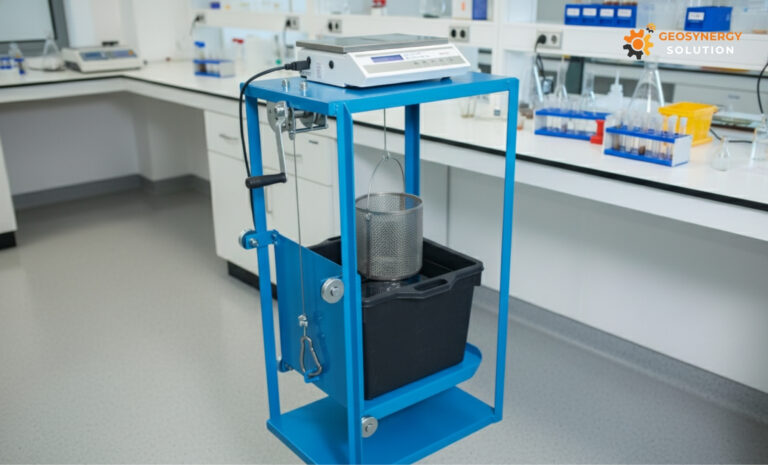
Specific Gravity: Key Parameter in Soil and Geotechnical Engineering
Specific Gravity (Gs) is one of the most fundamental laboratory parameters in geotechnical engineering used to determine the ratio of the mass of soil solids to the mass of an equal volume of water. This value plays an essential role in soil identification, classification, compaction analysis, and the evaluation of engineering behavior in various construction and mining projects.
Measuring Specific Gravity helps engineers understand the mineral composition of soil, estimate void ratios, and support accurate geotechnical modeling.
Purpose of Specific Gravity Testing
Specific Gravity testing provides critical input data for analytical soil properties, including:
Determining soil density
Calculating porosity and void ratio
Classifying soil according to ASTM or SNI
Supporting compaction and consolidation analysis
Providing input for hydraulic and strength design
A precise Specific Gravity value ensures reliable engineering interpretation and better decision-making in field applications.
Artikel terkait: Common Errors in Soil Moisture Testing and How to Avoid Them
How the Specific Gravity Test is Performed
The test is commonly conducted using a pycnometer, digital density meter, or volumetric flask. Typical laboratory steps include:
Weighing the dry soil sample
Filling the pycnometer with distilled water
Degassing to remove air bubbles
Measuring sample and apparatus weight
Calculating Specific Gravity using standard formulas
All procedures follow recognized testing standards such as ASTM D854 or SNI geotechnical testing guidelines.
Typical Specific Gravity Values
Average Specific Gravity values for common soil types:
| Soil Type | Typical Gs Range |
|---|---|
| Sand | 2.65 – 2.70 |
| Silt | 2.60 – 2.75 |
| Clay | 2.60 – 2.90 |
| Organic Soil | < 2.50 |
These values can indicate whether soil contains minerals such as quartz, iron, or organic material based on measured density.
Applications of Specific Gravity in Geotechnical Projects
Specific Gravity test results are widely used in:
1. Soil Classification
Helps differentiate between sand, silt, clay, peat, or industrial by-products.
2. Foundation Engineering
Supports modeling for settlement, bearing capacity, and soil behavior under loading.
3. Earthwork and Compaction
Used to calculate dry density, maximum compaction, and moisture relationships.
4. Groundwater Evaluation
Supports hydraulic conductivity estimation and permeability modeling.
5. Mining and Exploration
Indicates mineral composition and helps evaluate the presence of heavy minerals.
Accurate laboratory test results contribute directly to safer and more efficient construction and mining planning.
Why Specific Gravity Testing Matters
Reliable Specific Gravity data ensures:
More accurate engineering design
Reduced risk of unexpected ground failure
Better material evaluation before construction
Compliance with national and international testing standards
It is one of the simplest yet most valuable parameters in soil mechanics and geotechnical analysis.